
Online reputation management for Bangladeshi politicians has become essential in 2026, as most voters now research candidates online before making their decisions. Your digital presence is no longer optional. It’s the first impression you make on constituents, party members, and the media.
I’m Faruk Khan, CEO of Khan IT. Over the past 10+ years, I’ve helped over 200 clients build their digital presence, including major Bangladeshi brands like Walton BD (164% organic traffic growth). The same strategies that deliver measurable results for businesses apply directly to political reputation management.
This guide shares proven strategies from the Bangladesh market. You’ll learn how to audit your digital footprint, build a professional presence, create trust-building content, manage social media effectively, handle crises, and maintain long-term credibility.
The difference between successful and struggling politicians in 2026 isn’t just policy or party connections. It’s whether you understand that reputation is built or destroyed online, one search result at a time.
Let’s begin.
Table of Contents
- Why Online Reputation Matters for Bangladeshi Politicians
- Understanding Bangladesh’s Digital Landscape in 2026
- Understanding Your Current Digital Footprint
- Building Your Foundation: Website and Official Accounts
- Creating Content That Builds Trust and Credibility
- Managing Social Media Like a Professional
- Handling Criticism and Negative Content
- Engaging with Your Digital Constituency
- Monitoring Your Online Reputation
- Crisis Management and Damage Control
- Long-Term Reputation Maintenance
- Common Mistakes to Avoid
- Action Plan: Your First 30 Days
Why Online Reputation Matters for Bangladeshi Politicians
Let me be direct. When someone hears your name today, the first thing they do is search for you on Google or Facebook.
What they find in those first few seconds shapes their entire perception of you. If they see professional content, clear communication, and genuine engagement, you’ve made a good first impression. If they find nothing, outdated information, or negative content dominating the results, you’ve already lost their trust.
With 77.7 million internet users in Bangladesh as of January 2025 (DataReportal Digital 2025: Bangladesh), and internet penetration reaching 44.5% of the total population, your online presence reaches nearly half of all Bangladeshis. More significantly, 60 million Bangladeshis are active on social media platforms, representing 34.3% of the total population.
Your online reputation affects:
Voter Trust: People trust politicians who are accessible, transparent, and consistent online. A strong digital presence shows you’re modern, approachable, and willing to engage.
Media Coverage: Journalists research you online before interviews. Your digital footprint influences how they frame their stories about you.
Party Position: Party leadership evaluates candidates partly based on their public image and digital presence. A strong online reputation can lead to better positions and opportunities.
Crisis Resilience: When controversies arise, politicians with established credibility can weather storms better than those with weak or negative digital reputations.
Fundraising and Support: Donors and volunteers often discover candidates online. A professional presence attracts quality support.
The digital space in Bangladesh is unique. Facebook dominates with 60 million users as of January 2025 (DataReportal). YouTube reaches 44.6 million users, making it the second most popular platform. TikTok has grown dramatically to 46.5 million adult users. Understanding this landscape is your first step to managing your reputation effectively.
Research shows that 75% of users never scroll past the first page of search results (Backlinko). Those top ten results define your online reputation for most people who search for you.
Understanding Bangladesh’s Digital Landscape in 2026
Before building your online reputation, you need to understand where Bangladeshi voters spend their time online.
The Numbers That Matter
- 77.7 million internet users — nearly half of all Bangladeshis can research you online right now (DataReportal, 2025).
- 98% use mobile devices — if your content doesn’t work on smartphones, you don’t exist (GSMA).
- 60 million on social media — that’s 77.1% of all internet users actively engaging on platforms.
- 75% judge credibility by website design — your website is often the first impression voters form of you (Stanford University).
Where Your Voters Are
📱 Facebook: 73 million users
The undisputed champion. Reaches 51.5% of adults. Your primary platform, no exceptions.
🎥 YouTube: 44.6 million users
Growing explosively (+32.7% in one year). Perfect for speeches, town halls, and educational content.
⚡ TikTok: 46.5 million users
Reaches 40% of adults. Young, engaged audience. Can’t be ignored anymore.
💬 Messenger: 31.6 million users
Direct line to constituents. Personal, immediate communication.
💼 LinkedIn: 9.9 million members
Professional networking, policy discussions, business community engagement.
📸 Instagram: 7.5 million users
Visual storytelling. Strong with urban, educated voters.
🐦 X (Twitter): 1.74 million users
Small but influential. Journalists, activists, opinion leaders live here.
🌐 Your Website: Your Foundation
Research shows 75% of people judge your credibility based on your website’s design. Without a professional website, you lack the foundation that establishes trust before voters even reach your social media.
Understanding Your Current Digital Footprint
Before you can improve your reputation, you need to know what exists now.
Start with a simple search. Open Google in an incognito window and search for your name. What appears on the first page? That’s what most people see when they look you up.
Do the same on Facebook, YouTube, and other platforms. Search for variations of your name. Check if there are fake accounts pretending to be you. Look for mentions in news articles, blogs, and social media posts.
Document everything you find:
- Positive content: Official profiles, news coverage, achievements, community work
- Neutral content: Basic biographical information, event listings, general mentions
- Negative content: Criticisms, controversies, attack pieces, misinformation
- Missing information: Topics where you should have a presence but don’t
This audit shows you the starting point. Most politicians are surprised by what they find. Some discover fan pages they didn’t know existed. Others find negative content they thought had disappeared.
Pay special attention to the first page of Google results. Studies show that 75% of people never scroll past the first page. Those ten results define your online reputation for most people.
If you find fake accounts or impersonation, document them. You’ll need to report these and establish your verified, official presence.
The goal isn’t perfection. The goal is understanding reality so you can create a strategic plan.
Building Your Foundation: Website and Official Accounts
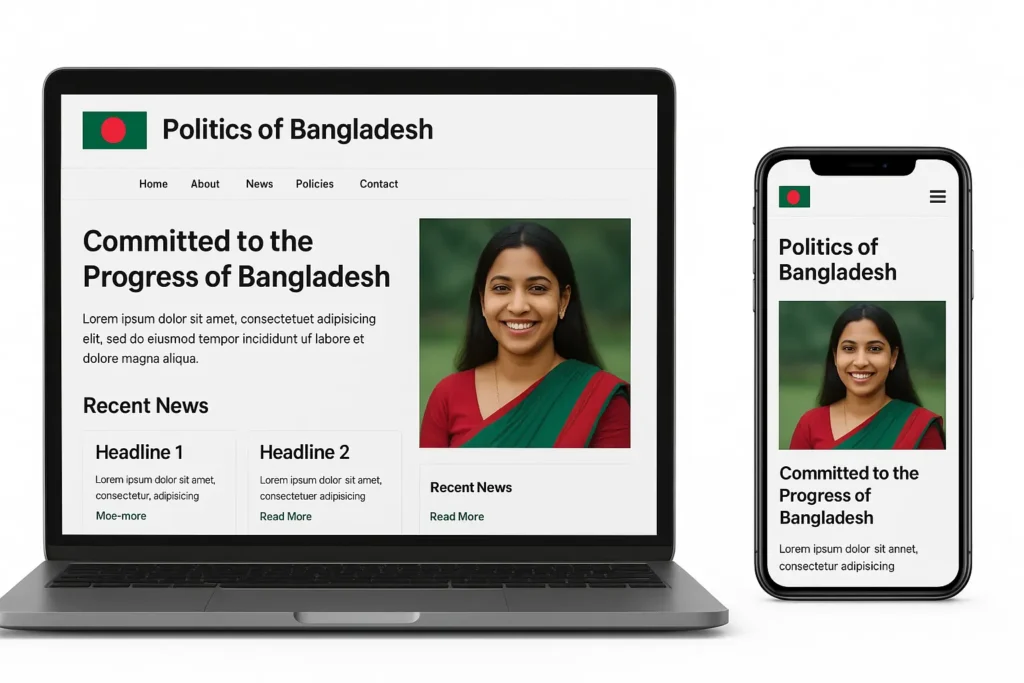
Your reputation management starts with controlling what you can control. That means establishing your official digital properties.
Your Political Website
Think of your website as your digital office. It’s the one place online that you completely control. No algorithm changes can hide it. No platform can delete it. It’s yours.
A professional political website should include:
About Page: Your background, experience, education, and why you serve in politics. Make it personal but professional. People want to know who you are as a person, not just a politician.
Issues and Positions: Clear explanations of where you stand on important topics. Use simple language. Avoid political jargon. If a voter can’t understand your position, they won’t support it.
News and Updates: Regular updates about your work, achievements, and activities. This keeps your site active and gives people reasons to return.
Contact Information: Multiple ways to reach you or your office. Phone, email, physical address, and contact forms. Accessibility builds trust.
Photo and Video Gallery: Visual content showing you working with constituents, attending events, and serving your community.
Bengali and English Content: Bangladesh is diverse. Offering both languages shows respect for all constituents and improves accessibility.
For hosting, I recommend reliable Bangladeshi providers or international hosting services with good Bangladesh connectivity. Your site must load quickly on mobile phones, as most Bangladeshi voters access the internet through smartphones.
Security is critical. Use HTTPS (the lock icon in browsers). This protects visitor data and signals credibility to both users and search engines.
Keep your design simple and professional. Avoid flashy elements that slow loading or distract from your message. Clean, fast, and mobile-friendly wins every time.
Verified Social Media Accounts
Your official social media presence must be clearly identifiable and verified when possible.
Facebook: Create a public figure page, not a personal profile. Apply for verification (the blue checkmark) once you have sufficient following and public recognition. Post consistently. Engage genuinely.
YouTube: Set up an official channel for speeches, interviews, and messages to constituents. Video content performs exceptionally well in Bangladesh.
LinkedIn: For professional networking, policy discussions, and connecting with business communities and professionals.
Use consistent naming across platforms. If possible, use the same profile photo and cover images to create visual recognition. Your name should be identical on all platforms to avoid confusion.
In your bio sections, clearly state your role and constituency. Include links to your official website. Make it obvious that these are your real accounts.
Enable two-factor authentication on all accounts. Political accounts are attractive targets for hackers. Security protects both your reputation and your constituents’ data.
Creating Content That Builds Trust and Credibility
Content is how you communicate your values, positions, and character. The quality and consistency of your content directly impact your reputation.
The Trust-Building Content Formula
People trust politicians who demonstrate three things through their content:
Competence: Show that you understand issues deeply and can offer real solutions.
Character: Demonstrate integrity, consistency, and genuine concern for constituents.
Connection: Prove that you understand their lives, challenges, and hopes.
Every piece of content you create should strengthen at least one of these three pillars.
Content Types That Work
Constituency Updates: Share what you’re doing for your area. Highlight problems you’re addressing, projects you’re supporting, and progress being made. Use specific examples with photos.
Educational Content: Explain complex issues in simple terms. Help voters understand policies, processes, and decisions. When you educate, you demonstrate respect for their intelligence.
Behind-the-Scenes: Show the reality of political work. Meetings, research, consultations with experts. This humanizes you and shows the effort behind decisions.
Community Spotlights: Feature local businesses, activists, teachers, healthcare workers, and others doing good work. This shows you pay attention and value community contributions.
Direct Communication: Personal messages addressing current events, concerns, or opportunities. These work especially well as video content.
Q&A Sessions: Regular opportunities for constituents to ask questions. This demonstrates accessibility and willingness to engage.
Writing for Bangladesh’s Digital Audience
Keep sentences short. Use simple words. Avoid political jargon and technical terms unless absolutely necessary, and always explain them clearly.
Write in both Bengali and English when possible. Many educated Bangladeshis prefer English for political content, but Bengali reaches a broader audience and shows cultural connection.
Use local examples and references. When discussing policy, relate it to specific Bangladesh contexts. Generic international examples feel distant and irrelevant.
Include visuals with every post. Photos, infographics, and videos perform better than text alone. Most people scroll social media quickly. Visual content stops them.
Be specific with numbers and facts. Instead of “many people,” say “over 5,000 families.” Instead of “improving healthcare,” say “adding 50 new hospital beds to serve 30,000 additional patients annually.”
Consistency Matters More Than Frequency
You don’t need to post ten times daily. You need to post consistently at a sustainable pace.
Decide on a schedule you can maintain. Three quality posts per week is better than daily posting for a month followed by silence. Inconsistency makes you appear unreliable.
Create a simple content calendar. Plan major posts around events, announcements, and important dates. Fill gaps with regular updates and educational content.
Managing Social Media Like a Professional
Social media is where most Bangladeshi voters will interact with your digital presence. Managing it professionally is essential for reputation building.
Facebook Strategy for Politicians
Facebook remains the dominant platform in Bangladesh with 73 million users as of Dec 2025. Your strategy here affects your reputation more than any other single platform.
Facebook’s reach in Bangladesh is substantial. The platform reaches 40.8% of the total population, 37.1% women and 62.9% men users. If you’re going to invest time in any single platform, Facebook should be your priority.
The platform is also growing rapidly. Facebook added 7.05 million new users in Bangladesh between January 2024 and January 2025, a growth rate of 13.3%. In just the three months between October 2024 and January 2025, Facebook gained 4.45 million users in Bangladesh. This growth means new voters are joining the platform constantly.
Page vs Profile: Use a public figure page, not a personal profile. Pages offer better tools, insights, and the ability to have multiple administrators. Personal profiles hit the 5,000 friend limit and lack professional features.
Posting Strategy: Mix different content types. Don’t make every post about your achievements. Share community news, educational content, and personal (but appropriate) moments.
Timing Matters: Post when your audience is active. For most Bangladeshi users, that’s 8-10 AM, 1-2 PM, and 7-10 PM. Test different times and check your page insights to see what works for your specific audience.
Live Video: Facebook Live creates immediate connection. Use it for town halls, Q&A sessions, or commentary on current events. Live video receives higher engagement and reach than recorded content.
Facebook Groups: Consider creating a supporter group for deeper engagement. Groups foster community and discussion beyond your main page.
Responding to Comments: Reply to questions and genuine comments. This shows accessibility. You don’t need to respond to every comment, but regular engagement demonstrates that you listen.
Understanding Facebook’s dominance in Bangladesh, with its reach extending to over half of all adults, makes this platform non-negotiable for serious political reputation management.
YouTube for Long-Form Content
YouTube has experienced explosive growth in Bangladesh, reaching 44.6 million users in January 2025, up 32.7% from the previous year (an increase of 11 million users in just 12 months). This makes it the second most popular platform after Facebook, reaching 25.5% of the total population and 57.4% of all internet users.
This rapid growth signals that Bangladeshis increasingly prefer video content, making YouTube essential for political communication.
Speech and Interview Archive: Upload important speeches, interviews, and public appearances. This creates a searchable record of your positions and communication.
Educational Series: Create playlists explaining issues, policies, or your legislative work. Educational content builds authority and trust.
Constituent Services: Show how your office helps people. These stories demonstrate real impact and make services more accessible.
Optimize for Search: Use descriptive titles, detailed descriptions, and relevant tags. Many people search YouTube directly for political content.
Thumbnails and Titles: Create clear, professional thumbnails. Use titles that accurately describe content. Avoid clickbait, which damages credibility.
With 11 million new users joining YouTube in Bangladesh in the past year alone, this platform offers tremendous growth potential for building your digital reputation through video content.
LinkedIn for Professional Networking
LinkedIn works differently than Facebook. Use it for:
Policy Discussions: Share longer-form thoughts on policy issues and governance.
Professional Relationships: Connect with business leaders, professionals, and other officials.
Thought Leadership: Write articles on governance, development, and policy. LinkedIn’s publishing platform is excellent for establishing expertise.
Event Participation: Share participation in conferences, seminars, and professional gatherings.
What Not to Post
Some content damages reputation regardless of platform:
Personal Attacks: Criticize policies and positions, not people. Personal attacks make you look petty and unprofessional.
Unverified Information: Never share news, statistics, or claims without verifying. Spreading misinformation destroys credibility permanently.
Overly Partisan Content: While you represent a party, being exclusively partisan alienates moderate voters and makes you seem one-dimensional.
Inappropriate Personal Content: Keep personal life content appropriate for public consumption. You’re always representing your office.
Engagement Bait: “Share if you agree” or “Tag 10 friends” posts look desperate and unprofessional.
Handling Criticism and Negative Content
Every politician faces criticism. How you handle it shapes your reputation more than the criticism itself.
Types of Criticism You’ll Face
Legitimate Policy Disagreement: People who genuinely disagree with your positions or decisions.
Constructive Feedback: Supporters or constituents pointing out problems or suggesting improvements.
Partisan Opposition: Political opponents criticizing for strategic reasons.
Misinformation and False Claims: Factually incorrect attacks or misrepresentations.
Personal Attacks: Attacks on character, appearance, family, or personal life.
Trolling: People criticizing just to provoke reactions.
Each type requires different responses.
The Response Framework
Legitimate Policy Disagreement: Engage respectfully. Explain your reasoning. Acknowledge valid points they make. You won’t change everyone’s mind, but respectful engagement shows character.
Example: “I understand your concerns about this policy. Here’s why I believe this approach will benefit our community… I respect that we may see this differently, and I appreciate you sharing your perspective.”
Constructive Feedback: Thank them and, when appropriate, act on good suggestions. This shows you listen and adapt.
Example: “Thank you for bringing this to my attention. You’re right that we need better communication about this service. I’m working with my team to improve accessibility.”
Partisan Opposition: Keep responses brief and professional. Focus on facts and your record. Don’t get drawn into lengthy arguments.
Example: “I respect different viewpoints. My record shows [specific achievements]. Voters can judge for themselves.”
Misinformation: Correct it once, clearly and with evidence. Then move on. Don’t keep arguing.
Example: “This claim is factually incorrect. [Provide correct information with source]. I’m happy to discuss actual policy differences, but let’s work with accurate information.”
Personal Attacks: Generally ignore them. Responding often amplifies them. If you must respond, take the high road completely.
Example: “I prefer to focus on serving constituents and discussing policy rather than personal matters. I’m happy to discuss [relevant issue] anytime.”
Trolling: Ignore completely. Trolls want attention. Responding gives them exactly what they want and wastes your time.
The 24-Hour Rule
When facing serious criticism or controversy, resist the urge to respond immediately. Wait 24 hours when possible.
Immediate responses are often emotional. They escalate situations. They create additional problems.
After 24 hours, you can respond thoughtfully, strategically, and effectively. This pause often reveals that some controversies don’t need responses at all.
When Criticism Reveals Real Problems
Sometimes criticism points to real issues you need to address.
If multiple people raise the same concern, pay attention. If constituents feel unheard, investigate why. If there’s confusion about your position, clarify it.
Good politicians learn from criticism. Using feedback to improve shows strength, not weakness.
Engaging with Your Digital Constituency
Reputation isn’t just about broadcasting. It’s about genuine two-way communication.
Making Engagement Meaningful
Ask Questions: Regularly seek input on issues. This shows you value constituent opinions and helps you understand community needs.
Share Their Content: When constituents or community organizations do good work, share it. This builds goodwill and shows you pay attention.
Acknowledge Messages: You can’t personally respond to everything, but acknowledge that you’re listening. “I’m reading all your messages about [issue]. Your input matters to me.”
Follow Through: If someone raises an issue and you say you’ll look into it, actually do it and report back. Following through builds tremendous trust.
Be Present in Comments: Occasionally respond to comments on your posts. Even brief responses show you’re reading and listening.
Digital Town Halls and Q&A Sessions
Regular Q&A sessions create structured engagement opportunities.
Announce in Advance: Give people time to prepare questions and attend.
Cover Various Topics: Don’t limit discussions. Address whatever constituents want to discuss.
Be Honest: If you don’t know something, say so. Promise to find out and actually follow up.
Use Multiple Formats: Try Facebook Live, YouTube Live, or even Twitter Spaces to reach different audiences.
Summarize Afterwards: Post a summary of questions discussed and answers given. This extends the value beyond live attendees.
Building a Supporter Network
Engaged supporters amplify your message and defend your reputation.
Recognize Contributors: Publicly thank volunteers and supporters (with their permission).
Create Opportunities: Give supporters ways to help beyond just voting. Event organizing, social media sharing, community projects.
Provide Resources: Give supporters accurate information they can share. Fact sheets, infographics, and shareable content make advocacy easier.
Build Community: Help supporters connect with each other, not just with you. Communities sustain themselves and create lasting support.
Monitoring Your Online Reputation
You can’t manage what you don’t measure. Regular monitoring helps you stay ahead of reputation issues.
What to Monitor
Google Search Results: Check your name weekly. Notice what appears on the first page and whether it’s changing.
Social Media Mentions: Track when people mention you, even when they don’t tag you. Most platforms offer basic mention tracking.
News Coverage: Set up Google Alerts for your name and key issues. This notifies you when new content appears.
Sentiment Changes: Notice whether discussions about you are becoming more positive, negative, or polarized.
Competitor Activity: Monitor what other politicians in your space are doing. Learn from their successes and avoid their mistakes.
Tools for Monitoring
Google Alerts: A free tool that emails you when your name appears in new content. Set up alerts for your name, constituency, and key issues.
Social Media Search: Use platform search features regularly. On Facebook, search your name and filter by recent posts.
Facebook Page Insights: Check who’s engaging with your content, when they’re active, and what content performs best.
YouTube Analytics: Understand which videos resonate and how people find your content.
Manual Checking: Don’t rely only on automated tools. Regularly search yourself manually to catch things automated tools miss.
Creating a Monitoring Schedule
Daily: Check major social media platforms for direct messages and important mentions.
Weekly: Review Google search results, check social media mentions, and analyze engagement on recent posts.
Monthly: Deep analysis of overall trends, sentiment changes, and strategy effectiveness.
Quarterly: Comprehensive reputation audit, checking all platforms and reviewing overall digital presence.
Consistent monitoring catches small issues before they become big problems.
Crisis Management and Damage Control
Despite your best efforts, crises will happen. Preparation and quick, appropriate response protect your reputation.
Crisis Preparation
Establish a Crisis Team: Identify who will help during crises. This might include advisors, communications staff, legal counsel, and trusted supporters.
Create Response Protocols: Decide in advance how you’ll handle different scenarios. Who approves statements? How quickly will you respond? What platforms will you use?
Prepare Template Statements: For common scenarios (allegations, misunderstandings, emergencies), have basic response templates ready to customize quickly.
Maintain Contact Lists: Keep updated lists of key media contacts, supporters, and stakeholders you might need to reach quickly.
Document Everything: Keep records of your actual statements, decisions, and actions. This protects against misrepresentation.
During a Crisis
Assess the Situation: Understand what’s actually happening before responding. Get complete information.
Determine If Response Is Needed: Not everything requires a response. Some issues fade quickly if ignored. Others demand immediate action.
Respond Quickly But Thoughtfully: When response is needed, act within hours, not days. But take enough time to craft an appropriate message.
Be Honest and Direct: Admit mistakes if you made them. Correct misinformation with facts. Take responsibility when appropriate.
Control Your Channels: Make official statements on your platforms first, before talking to media. This ensures your message gets out accurately.
Stay Consistent: Don’t change your story. Inconsistency destroys credibility faster than the original problem.
Show Empathy: If people are hurt or concerned, acknowledge their feelings. Show you understand the impact.
Provide Updates: Don’t disappear after an initial statement. Keep people informed as situations develop.
After the Crisis
Evaluate Your Response: What worked? What didn’t? What will you do differently next time?
Thank Supporters: Acknowledge people who stood by you or helped manage the situation.
Rebuild Actively: Return to regular, positive communication. Show through actions that you’ve learned and moved forward.
Don’t Dwell: After addressing a crisis, move on. Continuing to discuss it keeps it alive.
Document Lessons: Write down what you learned for future reference.
Common Political Crisis Scenarios
Old Social Media Posts: If problematic old content surfaces, acknowledge it directly. “That post from 2015 doesn’t reflect who I am today. I’ve learned and grown, and I regret that statement.”
Misquotes or Misrepresentation: Quickly provide the full context or accurate quote. “Here’s what I actually said [with source], and here’s what I meant.”
Family Member Issues: Draw clear boundaries. “That’s a private family matter” or “I’m responsible for my actions, not theirs.”
Financial Questions: Provide documentation and transparency. Financial issues require complete openness.
Policy Flip-Flops: Explain honestly why your position changed. “I changed my view after [new information/experience]. Here’s why.”
Long-Term Reputation Maintenance
Building a reputation is ongoing work, not a one-time project.
Consistency Over Years
Your reputation compounds over time. Every positive interaction adds to your credibility bank. Every kept promise increases trust.
Maintain Regular Activity: Don’t go silent between elections. Year-round presence shows you care about service, not just votes.
Keep Promises: When you commit to something publicly, deliver. Your track record of following through becomes your most valuable reputation asset.
Evolve Thoughtfully: Update your positions when warranted, but explain changes clearly. Evolution shows growth. Sudden reversals look opportunistic.
Document Achievements: Regularly share what you’ve accomplished. People forget quickly. Consistent reminders of your impact reinforce positive reputation.
Building Digital Assets
Create content that has lasting value beyond immediate posts.
Video Library: Build a comprehensive archive of your speeches, interviews, and messages. This becomes a searchable record of your service.
Policy Explainers: Create detailed explanations of your positions on major issues. These become reference materials people can share.
Case Studies: Document specific problems you solved or improvements you delivered. Concrete examples are more persuasive than general claims.
Educational Content: Create resources that help constituents understand issues, access services, or engage with government. This builds authority and demonstrates service orientation.
Adapting to Platform Changes
Digital platforms constantly evolve. Staying current shows you’re engaged and modern.
Follow Platform Updates: Major platforms announce algorithm changes and new features. Understand these and adapt your strategy.
Test New Features: When platforms introduce new tools (like Stories, Reels, or Live features), experiment with them. Early adopters often get better reach.
Learn from Analytics: Let data guide your evolution. If video performs better than text, create more video. If morning posts get more engagement, post in the morning.
Don’t Abandon What Works: Evolution doesn’t mean complete revolution. Keep effective strategies while adding new approaches.
Reputation as Long-Term Investment
Think of online reputation like a garden, not a construction project.
Gardens need consistent care. They grow gradually. They require different activities in different seasons. But with patient, regular attention, they flourish.
Your reputation works the same way. Daily small actions create long-term strength. Quick fixes don’t work. Consistency does.
Common Mistakes to Avoid
Learning from others’ mistakes is cheaper than making your own.
Buying Followers or Engagement
Fake followers and purchased engagement destroy credibility. People can tell when numbers don’t match actual interest. Platforms detect fake engagement and may penalize your account.
Real influence comes from genuine followers who actually care about your message. 1,000 engaged real followers are more valuable than 100,000 fake ones.
Deleting Criticism
Deleting critical comments (unless they’re abusive or contain misinformation) makes you look afraid of feedback and weak.
Criticism shows you’re relevant enough for people to care about your positions. Engaging with it professionally shows strength.
Inconsistent Presence
Posting actively for three months then disappearing for six months damages your reputation. It makes you appear opportunistic, only engaging when you want something.
Choose a sustainable pace and maintain it consistently.
Over-Automation
Automated posting, responses, and engagement feel impersonal and robotic. People want to connect with you, not a bot.
Use automation for scheduling, but keep your actual communication personal and genuine.
Ignoring Mobile Users
Over 90% of Bangladeshi internet users access platforms primarily through mobile phones. If your website doesn’t work well on mobile, you’re invisible to most voters.
Test everything on mobile devices. If it doesn’t work smoothly on a phone, fix it.
Neglecting Security
Hacked accounts cause enormous reputation damage. Protecting your digital properties is protecting your reputation.
Use strong passwords, enable two-factor authentication, limit who has account access, and monitor for suspicious activity.
Trying to Please Everyone
You cannot make everyone happy. Trying to do so makes you appear inconsistent and unprincipled.
Stand clearly for your values and positions. Respect disagreement without abandoning your principles.
Talking But Not Listening
Politicians who only broadcast messages without listening lose trust. Social media is called “social” because it’s meant to be conversational.
Ask questions, solicit feedback, acknowledge input, and show that constituent voices shape your decisions.
Action Plan: Your First 30 Days
If you’re starting from scratch or rebuilding your reputation, here’s a practical 30-day plan.
Week 1: Audit and Foundation
Days 1-2: Complete digital footprint audit. Search yourself everywhere. Document what exists.
Days 3-4: Secure your accounts. Enable two-factor authentication on all platforms. Change weak passwords. Check admin access on pages.
Day 5: Claim your name on major platforms. Even if you won’t use every platform immediately, secure your name to prevent impersonation.
Days 6-7: Plan your strategy. Decide which platforms you’ll prioritize. Define your key messages and content themes.
Week 2: Establish Your Presence
Days 8-10: Set up or optimize your website. Ensure it’s mobile-friendly, secure (HTTPS), and contains essential information.
Days 11-12: Complete all social media profiles. Use consistent branding. Write clear, complete bio sections. Add contact information.
Days 13-14: Create your first content. Write or record introductory messages explaining who you are and what you stand for.
Week 3: Build Momentum
Days 15-17: Post consistently. Share three pieces of valuable content. Mix content types (updates, educational content, community spotlights).
Days 18-20: Start engaging. Respond to comments. Join relevant conversations. Show you’re listening and accessible.
Day 21: Review analytics. See what’s working. Notice who’s engaging. Adjust your approach based on early data.
Week 4: Establish Routines
Days 22-24: Create content calendar. Plan next month’s major content. Identify important dates and events.
Days 25-27: Reach out to supporters. Connect with people who’ve engaged positively. Build relationships.
Days 28-29: Set up monitoring tools. Create Google Alerts. Establish checking routines.
Day 30: Evaluate and adjust. Review the month. What worked well? What needs improvement? Plan next month’s focus.
Continuing Beyond 30 Days
After this foundation, maintain these habits:
Daily: Check major platforms for messages and important mentions. Engage authentically when appropriate.
Weekly: Post 2-3 pieces of quality content. Review basic analytics. Monitor Google search results.
Monthly: Deep dive into analytics. Plan next month’s content. Evaluate overall strategy effectiveness.
Quarterly: Comprehensive reputation audit. Major strategy reviews and adjustments.
Final Thoughts
Online reputation management for Bangladeshi politicians isn’t complicated, but it requires commitment and consistency.
Your digital presence is now inseparable from your political identity. Voters will judge you based on what they find online. Media will research you digitally. Opponents will look for weaknesses. Supporters will seek reasons to believe in you.
The good news? You have significant control over your reputation. Through professional presence, genuine engagement, quality content, and consistent effort, you can build credibility that opens doors and creates opportunities.
This isn’t about manipulation or creating a false image. It’s about communicating your authentic self effectively in digital spaces where voters now spend their time.
Start today. Audit your current presence. Fix obvious problems. Begin creating valuable content. Engage genuinely with constituents. Monitor feedback. Adjust and improve.
Your reputation is built one interaction at a time, one post at a time, one response at a time. Make each one count.
The digital age hasn’t made politics easier, but it has made genuine, direct communication with constituents more possible than ever before. Use that opportunity wisely.
Need help building your digital political presence? Our team specializes in helping Bangladeshi political leaders establish credible, effective online reputations.