Google algorithms you must understand in 2026 have evolved dramatically from just a couple of years ago. I’ve been working in SEO since 2014, and over that time I’ve helped more than 200 clients worldwide. From small local businesses in Bangladesh to massive enterprises like Walton BD. And through all those projects, one truth has become crystal clear.
Google’s algorithms are not your enemy. They’re your guide to better rankings.
But here’s something most SEO professionals won’t admit. In 2025, Google only made four confirmed algorithm announcements. Three core updates and one spam update. That’s all.
Yet rankings were incredibly volatile throughout the entire year. Websites were seeing traffic swings, position changes, and unpredictable results month after month.
Why the disconnect? Because Google is now running continuous, unannounced updates in the background. Small algorithmic adjustments happening every single day that quietly reshape search results without any official announcement.
If you’re still using SEO tactics from 2023 in January 2026, I hate to say it, but you’re already behind.
I’m going to walk you through the exact algorithms and ranking systems that actually matter right now. Not guesses or theories. Real information based on documented updates, actual data, and my hands-on experience managing SEO through every major algorithm shift over the past decade.
Table of Contents
- Understanding Google’s Current Algorithm Landscape in 2026
- The Core Ranking Systems You Must Master in 2026
- 1. Helpful Content System (Now Integrated into Core Ranking)
- 2. E-E-A-T: Experience, Expertise, Authoritativeness, Trustworthiness
- 3. AI-Driven Content Evaluation
- 4. Search Generative Experience (SGE) and AI Overviews
- 5. Core Web Vitals & Page Experience
- 6. BERT & Hummingbird: Understanding Search Intent
- 7. Mobile-First Indexing
- 8. Link Evaluation Systems (PageRank Evolution)
- 9. Local SEO & “Near Me” Ranking Systems
- The Spam Detection Systems You Need to Avoid
- What Changed in Late 2025 That Impacts Your 2026 Strategy
- My Proven 2026 SEO Strategy Framework
- Common Mistakes That Will Kill Your Rankings in 2026
- How to Future-Proof Your SEO Strategy
- Final Thoughts from a Decade in SEO
Understanding Google’s Current Algorithm Landscape in 2026
First, let’s clear up a massive misconception.
When people talk about “the Google algorithm,” they’re wrong. There is no single algorithm. Google uses a collection of interconnected ranking systems that work together to evaluate your content. Think of it as an orchestra—each instrument (system) plays its part, and together they create the final result you see in the SERP.
Here’s what actually happened in 2025 that shapes your 2026 strategy:
The Three Major Core Updates of 2025
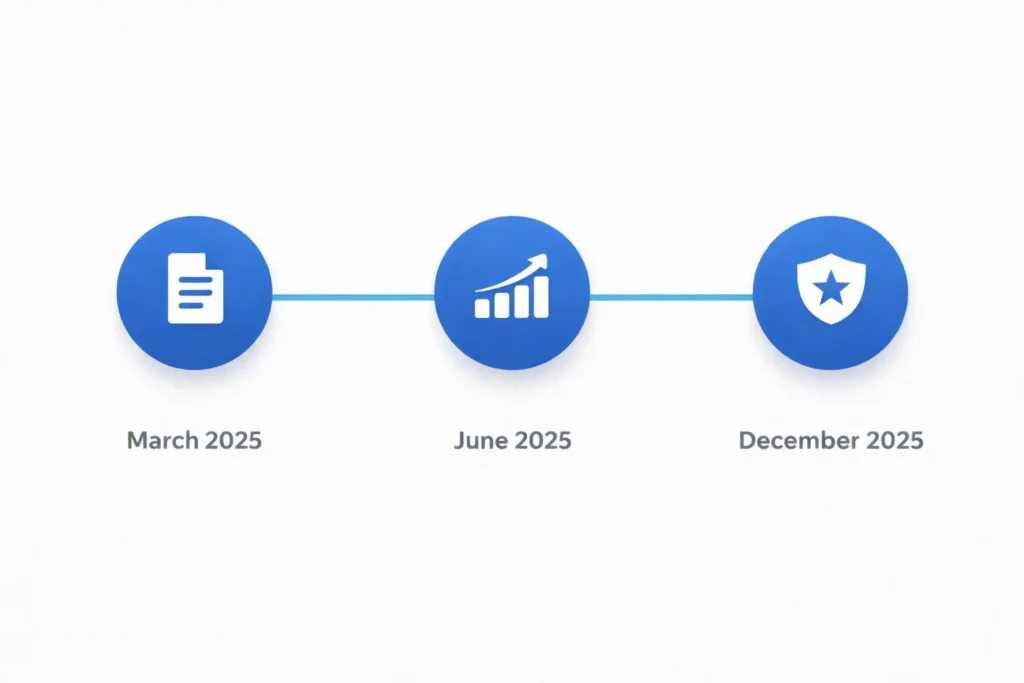
1. March 2025 Core Update (March 13-27, 14 days) This update targeted unhelpful content and rewarded sites that provided genuine value. I noticed many of my clients who had thin, keyword-stuffed content experienced drops, while those with comprehensive, experience-based content saw improvements.
2. June 2025 Core Update (June 30 – July 17, 16 days) This was one of the largest core updates in recent memory. Some sites that were hit by the September 2023 Helpful Content Update finally saw partial recoveries—but only if they had genuinely improved their content quality.
3. December 2025 Core Update (December 11-29, 18 days) Completed just recently, this update raised the quality bar even higher. The pattern is clear: each update is taking longer to roll out (14, 16, then 18 days), indicating growing complexity in Google’s ranking systems.
The August 2025 Spam Update
This targeted manipulative link schemes, cloaking, and low-quality AI-generated spam. Several affiliate sites I audited lost 40-70% of their traffic because they relied on mass AI content without human oversight.
The Core Ranking Systems You Must Master in 2026
Based on Google’s official documentation and my own testing across hundreds of projects, here are the active ranking systems that will determine your success:
1. Helpful Content System (Now Integrated into Core Ranking)
This is no longer a separate update—it’s permanently baked into Google’s core algorithms.
What this means for you: Google is actively demoting content created primarily for search engines rather than humans. I’ve seen this firsthand. One client came to me after their traffic dropped 60%. The problem? Their blog posts answered zero real user questions. They were optimized for keywords but useless to actual readers.
My Opinion: The Helpful Content System is actually one of the best things Google has done for SEO. It forces us to do what we should have been doing all along—creating content that genuinely helps people.
What you must do:
- Write for humans first, search engines second
- Answer real questions your audience is asking
- Provide depth, not just word count
- Include original research, case studies, and first-hand experience
When I built the Pet Zone BD case study, I didn’t just list tactics. I showed actual data, real timelines, and specific results over 24 months. That’s the kind of helpful content Google rewards in 2026.
2. E-E-A-T: Experience, Expertise, Authoritativeness, Trustworthiness
E-E-A-T isn’t a direct ranking factor, but it’s the framework Google uses to evaluate content quality.
Notice the double “E”—Experience was added in 2022, and it’s now more important than ever.
Here’s what I’ve observed: Content written by someone who has actually done something outranks content written by someone who just researched it. Always.
Real Example from My Work: When I write about SEO for e-commerce, I reference my actual work with Walton BD—securing first-page rankings for 210 out of 213 keywords. That’s experience. That’s credibility. That’s what Google’s systems are looking for.
How to demonstrate E-E-A-T in 2026:
- Use clear author bylines with credentials
- Link to author pages with background information
- Cite credible sources and studies
- Show real results, not theoretical knowledge
- Include case studies and client testimonials
- Display professional certifications
As someone who is a Course Coordinator at Bangladesh Technical Education Board and has trained 85,000+ students, I make sure this expertise is visible on every page where it’s relevant.
3. AI-Driven Content Evaluation
Google is using Large Language Models (LLMs) and AI to understand content at a deeper level than ever before.
The algorithm can now detect:
- Whether content is genuinely useful or just keyword-optimized
- If it’s original or regurgitated information
- Whether it demonstrates real experience
- If it’s written by an expert or a content mill
My Take on AI Content: AI is a tool, not a replacement for expertise. I use AI to help with research and structure, but every piece of content gets human review, fact-checking, and personal insights from my 10+ years of experience.
Sites using pure AI content with no human oversight saw the worst drops in December 2025. Sites using AI as an efficiency tool while maintaining human expertise? They’re doing fine.
4. Search Generative Experience (SGE) and AI Overviews
This is Google’s AI-powered search feature that provides instant summaries at the top of search results.
If you’re not optimizing for SGE visibility in 2026, you’re missing a massive opportunity.
What works for SGE:
- Structured content with clear headers
- Direct answers to specific questions
- Schema markup implementation
- Featured snippet optimization
- Conversational, natural language
- Entity optimization (making Google recognize your brand as an authority)
I’ve been focusing heavily on semantic SEO and entity optimization for my clients. It’s no longer just about ranking for keywords—it’s about being recognized as an authoritative entity in your industry.
5. Core Web Vitals & Page Experience
Technical SEO is now a baseline requirement, not a competitive advantage.
Google continues to prioritize Core Web Vitals:
- Largest Contentful Paint (LCP): Load time
- Cumulative Layout Shift (CLS): Visual stability
- Interaction to Next Paint (INP): Responsiveness (replaced FID in 2024)
Reality Check: I’ve audited sites with perfect content that weren’t ranking. The problem? Their Core Web Vitals scores were in the red. Your content doesn’t matter if users can’t access it quickly on mobile devices.
For Infinity Pool, we transformed their site from zero visibility to 700+ monthly visitors in 90 days—but we started with technical foundation before touching content.
6. BERT & Hummingbird: Understanding Search Intent
Google doesn’t just match keywords anymore. It understands meaning, context, and intent.
BERT (Bidirectional Encoder Representations from Transformers) helps Google understand:
- Natural language queries
- Conversational search
- Context within longer searches
- Voice search queries
What this means for your strategy: Stop thinking in keywords. Start thinking in topics and questions.
When someone searches “best SEO service in Bangladesh,” Google understands they’re looking for local providers with proven results, not just pages that repeat that phrase 50 times.
7. Mobile-First Indexing
This isn’t new, but it’s non-negotiable in 2026.
Google predominantly uses the mobile version of your site for indexing and ranking. If your mobile experience is poor, your rankings will suffer—no matter how good your desktop version is.
Every single website I work on is mobile-first from day one. That’s not optional anymore.
8. Link Evaluation Systems (PageRank Evolution)
Backlinks are still important, but quality has completely replaced quantity.
Google’s AI now understands:
- The reason behind a link (editorial endorsement vs. paid placement)
- Contextual relevance (does the linking site cover related topics?)
- Natural link velocity (sudden spikes trigger spam filters)
- Authority transfer (links from trusted sources in your niche)
I’ve completely changed my link-building approach over the years. I no longer chase high DA links. I pursue contextually relevant, editorially earned links from sites my target audience actually reads.
9. Local SEO & “Near Me” Ranking Systems
For local businesses (which includes most of my Bangladeshi clients), local ranking factors have intensified:
- Google Business Profile optimization
- Local citations consistency
- Reviews quality and quantity
- Local content relevance
- Entity recognition in local context
When I work with local businesses in Dhaka, we focus heavily on Google Maps visibility, because that’s where the majority of local traffic comes from.
The Spam Detection Systems You Need to Avoid
Google’s spam systems have gotten frighteningly good at detecting manipulation:
SpamBrain: AI-powered spam detection that catches:
- Link schemes
- Auto-generated content
- Cloaking and redirects
- Keyword stuffing
- Hidden text
- Scraped content
My Warning: Don’t try to game the system. I’ve seen businesses destroy 5+ years of SEO work with a single black-hat campaign. It’s never worth it.
What Changed in Late 2025 That Impacts Your 2026 Strategy
Here’s what the December 2025 Core Update revealed about Google’s direction:
Experience Now Trumps Theory
Content creators who demonstrate first-hand experience are dominating rankings. Generic “how-to” articles without real-world application are dropping.
This is why I always include:
- Actual client results
- Specific timeframes
- Real challenges faced
- Measurable outcomes
AI Content Sophistication
Google can now differentiate between high-quality AI-assisted content and low-quality AI-generated spam.
The winning formula? AI for efficiency + human expertise for quality.
YMYL Expansion
“Your Money or Your Life” (YMYL) scrutiny has expanded beyond health and finance into:
- E-commerce
- Legal advice
- Career information
- Real estate
- Travel safety
Higher E-E-A-T standards now apply across virtually all industries.
Zero-Click Search Reality
With AI Overviews and featured snippets, many searches now end without a click.
You need to optimize for brand visibility in SGE even if users don’t visit your site. Being cited as the source builds authority for future searches.
My Proven 2026 SEO Strategy Framework
After implementing these systems across 200+ projects, here’s what actually works:
1. Prioritize Topical Authority Over Random Content
Don’t cover 50 different topics superficially. Dominate 5 topics deeply.
This is how I structured my own website—focusing on SEO expertise rather than trying to cover all of digital marketing.
2. Implement Structured Data Everywhere
Schema markup isn’t optional. It’s how Google understands your content for:
- Rich results
- Featured snippets
- AI Overviews
- Knowledge panels
3. Create Content Clusters
Link related content together. Show Google you’re an authority on specific topics through interconnected, comprehensive content hubs.
4. Optimize for Multiple Search Experiences
Your content needs to perform in:
- Traditional blue links
- Featured snippets
- AI Overviews
- People Also Ask boxes
- Video carousels
- Image search
5. Measure Real Engagement, Not Just Rankings
Google tracks:
- Dwell time
- Bounce rate
- Click-through rate
- Return visits
- Social signals
Create content people actually engage with, not just content that ranks.
Common Mistakes That Will Kill Your Rankings in 2026
I see these mistakes constantly in audits:
❌ Creating content for keywords instead of for users
❌ Using AI content without human expertise overlay
❌ Ignoring E-E-A-T signals (no author info, no credentials)
❌ Poor mobile experience
❌ Slow site speed
❌ Thin content across too many topics
❌ Manipulative link building
❌ No schema markup
❌ Outdated content that hasn’t been refreshed
❌ Keyword stuffing (yes, people still do this in 2026!)
How to Future-Proof Your SEO Strategy
Here’s my honest advice after 10+ years in this industry:
1. Follow Google’s Webmaster Guidelines religiously They literally tell you what they want. Listen to them.
2. Create content you’d be proud to share with your industry peers If you wouldn’t put your name on it, don’t publish it.
3. Build real expertise and demonstrate it You can’t fake E-E-A-T. Develop genuine skills and showcase them.
4. Stay updated but don’t panic Algorithm updates happen constantly. Focus on long-term quality, not short-term hacks.
5. Measure what matters Rankings are vanity metrics. Focus on traffic, conversions, and revenue.
6. Invest in technical excellence Your content won’t matter if your site is slow, broken, or un-crawlable.
7. Think beyond Google Optimize for user experience first. That’s what Google is trying to measure anyway.
Final Thoughts from a Decade in SEO
I’ve been doing SEO since 2014. I’ve survived Panda, Penguin, Hummingbird, Mobile-First, BERT, Helpful Content, and countless core updates.
Here’s what hasn’t changed:
Quality always wins. Eventually.
You might see spammy sites outrank you temporarily. You might see competitors use black-hat tactics and succeed briefly. But Google’s algorithms get smarter every day, and they always catch up.
The websites that dominated in 2015 and still dominate today? They focused on genuine value, real expertise, and user satisfaction from day one.
SEO is not a one-time project. It’s not a checklist. It’s a continuous commitment to providing the best possible experience for your audience while making it easy for Google’s systems to understand and rank your content.
If you take that approach—combining technical excellence with genuinely helpful content and demonstrated expertise—you’ll not just survive the algorithm updates of 2026.
You’ll thrive.
Need help navigating Google’s complex algorithm landscape? As an SEO expert with 10+ years of experience and 200+ successful projects, I can help you develop a white-hat, sustainable SEO strategy that works with Google’s algorithms, not against them.
Contact me for a personalized SEO consultation →
Related Resources:


খুবই চমৎকার ও তথ্যবহুল একটি ব্লগ। ২০২৬ সালের জন্য Google Algorithm যেভাবে বাস্তব অভিজ্ঞতা ও ডাটা ভিত্তিকভাবে ব্যাখ্যা করা হয়েছে, তা সত্যিই প্রশংসনীয়। বিশেষ করে Helpful Content System, E-E-A-T এবং AI Content ব্যবহারের বাস্তব দিকগুলো খুব পরিষ্কারভাবে তুলে ধরা হয়েছে।
আমি Kanok Miah, একজন ৫ বছরের অভিজ্ঞ SEO Expert, এবং আমার অভিজ্ঞতা থেকেও বলতে পারি—২০২৬ সালে SEO মানে আর ট্রিক না, বরং real value, user experience এবং expertise। এই ব্লগটি নতুন ও অভিজ্ঞ দুই ধরনের SEO প্রফেশনালের জন্যই খুব উপকারী হবে।